2017
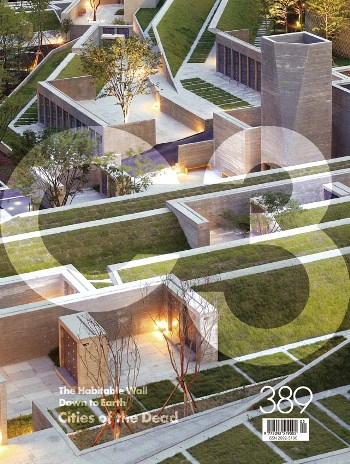
C3 No. 389 — “The Habitable Wall, Cities of the Dead, Down to Earth”
C3
by Richard Ingersoll
Architecture
Location: Milano, Italy
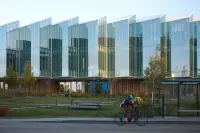
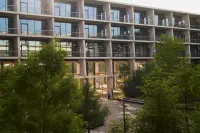
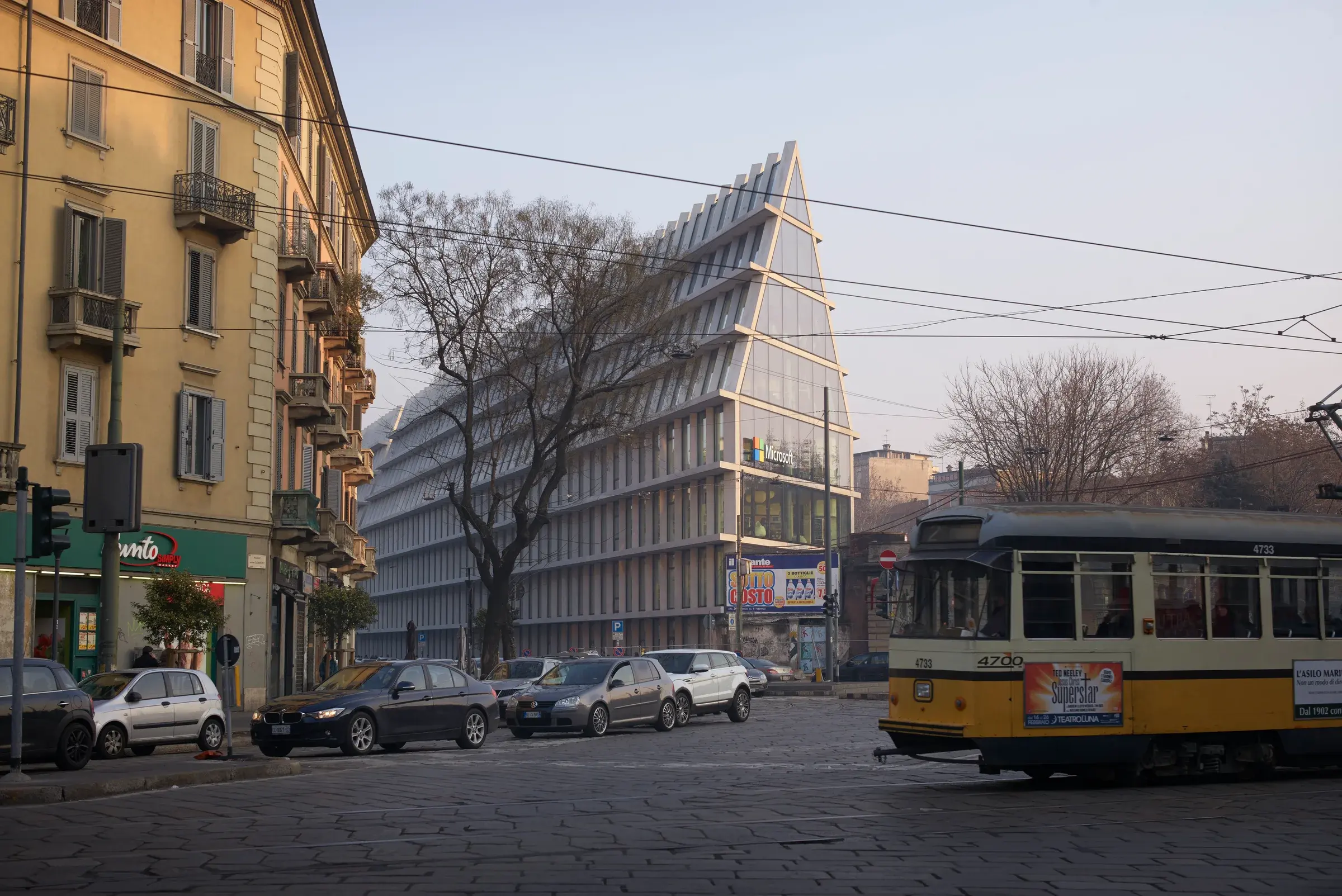
Fondazione Giangiacomo Feltrinelli by Herzog & de Meuron forms part of a larger redefinition of Milan’s Porta Volta area, a historically charged site along the former line of the city’s Spanish Walls. The project introduces two long, linear buildings for offices, cultural activities, a library, bookshop, café, and public facilities, while preserving the archaeological remains of the Mura Spagnole and giving new civic life to a once-fragmented urban void.
The buildings follow the geometry of the site with striking clarity. Their steep pitched roofs and repetitive structural rhythm create a simple but expressive silhouette, at once contemporary and deeply rooted in Milanese architectural memory. Herzog & de Meuron refer to the scale and restraint of historic Milanese buildings such as the Ospedale Maggiore, the Lazzaretto, and Castello Sforzesco, as well as the long linear forms of Lombard farmhouses. These references are not quoted literally, but translated into an architecture of structure, repetition, and urban continuity.
At street level, the project opens itself to the city through cafés, shops, and public space, including a green promenade with pedestrian and bicycle routes. The result is a building that does more than house an institution: it reconstructs a piece of Milan. With its precise form and almost archetypal roofline, Feltrinelli Porta Volta becomes a new civic landmark, quietly monumental yet porous, preserving the memory of the city’s walls while drawing public life back into their trace.